
Originally published September 20, 2016. Updated August 2, 2026.
Oral cancer includes cancers of the lips, tongue, cheeks, floor of the mouth, gums, and the back of the throat. It is often found late because early changes can be painless and easy to overlook, and outcomes are better when it is caught early. Your dentist looks at these tissues at every routine exam, which makes a regular dental visit one of the easiest ways to have your mouth checked. This guide explains the warning signs, the risk factors, what an oral cancer screening involves, and what to do if you notice something unusual.
What are the signs and symptoms of oral cancer?
The American Dental Association (ADA) lists these warning signs when they last longer than two weeks:
- A sore or irritation that does not go away
- Red or white patches in the mouth
- Pain or numbness in the mouth or lips
- Lumps or thickened areas
- Difficulty chewing or swallowing
- Loose teeth
- A changed sensation in the throat, or voice changes
The American Cancer Society adds mouth numbness, denture fit problems, ear pain, and a lump in the neck, and advises seeing a doctor or dentist if any of these last more than a few weeks. Many of these signs have common, harmless causes. For example, most canker sores heal in one to two weeks, so read our guide to canker sores. A sore that does not heal is the one to have checked.
Who is at risk for oral cancer?
The ADA identifies tobacco use and alcohol as the main modifiable risk factors, and notes that men and older people are at higher risk. It also says human papillomavirus (HPV) has been linked with cancers at the back of the mouth. The American Cancer Society similarly names tobacco and alcohol as the primary risk factors in the United States, and sun exposure as the most important factor for lip cancer. Not everyone with oral cancer has these risk factors, which is why screening at routine exams applies to all adults.
What happens during an oral cancer screening?
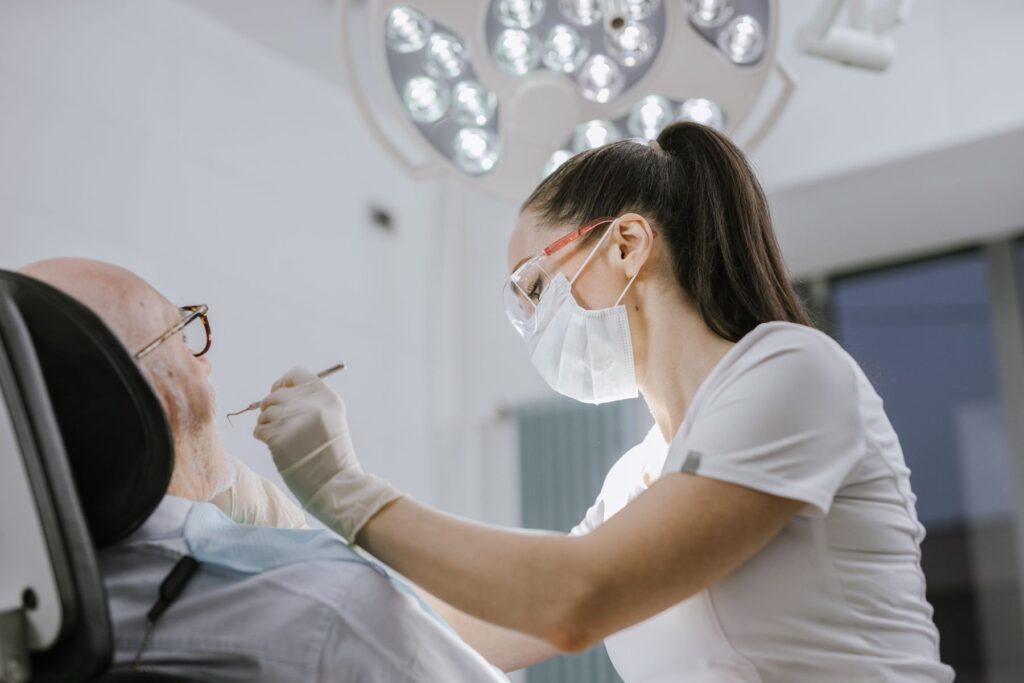
It is a simple part of a routine dental exam. As the ADA describes, your dentist examines your lips, the lining of your cheeks, gums, the front and back of your tongue, the floor and roof of your mouth, your throat, and tonsils, and checks your jaw and neck for lumps or unusual signs. It takes just a few minutes and does not hurt. Current ADA clinical guidance advises clinicians to perform a comprehensive extraoral and intraoral exam on all adults and to record updated medical, social, and dental histories. Our preventive dentistry team includes this at your checkups.
Does screening find cancer earlier?
Here it is worth being precise. The U.S. Preventive Services Task Force (USPSTF) concluded that the evidence is insufficient to determine the balance of benefits and harms of screening asymptomatic adults for oral cancer. Its recommendation applies to screening by primary care providers, not dental providers, and it cites uncertainty about accuracy and the possibility of overdiagnosis. In other words, research has not settled how much routine screening improves outcomes. Meanwhile, the ADA and the American Cancer Society emphasize that many pre-cancers and cancers found in the mouth are detected during routine exams by dentists, doctors, or hygienists, or when patients notice a change and report it. A practical message follows: keep your regular exams, and do not wait to have a sore that will not heal checked.
How is oral cancer diagnosed?
A suspicious area cannot be judged by sight alone. Oral cancer can be diagnosed only with a biopsy, in which a small sample of tissue is removed and examined under a microscope. If a sore or patch does not heal in a reasonable amount of time, your dentist may recommend a biopsy or refer you to a specialist.
How can you lower your risk?
- Avoid tobacco in all forms.
- Limit alcohol.
- Consider the HPV vaccine. The ADA notes it protects against the types of HPV that can cause oral cancers.
- Protect your lips from the sun with lip balm that contains SPF, especially if you spend a lot of time outdoors.
- Keep regular dental exams, and tell your dentist about any change you notice. See how often to visit the dentist.
When should you see a dentist right away?
The ADA advises calling your dentist right away if any of the warning signs last longer than two weeks. Do not wait for pain, since early oral cancer is often painless. If you have a sore that has not healed, a persistent red or white patch, a lump, or numbness, book an exam. If you wear dentures and suddenly notice a poor fit or a sore spot, see our guide to dentures and let us examine the area.
Frequently asked questions about oral cancer screening
What are the early signs of oral cancer?
Common warning signs include a sore or irritation in the mouth that does not go away, red or white patches, a lump, pain or numbness, difficulty chewing or swallowing, loose teeth, and changes in your voice. The American Dental Association says to call your dentist if any of these last longer than two weeks.
What does an oral cancer screening involve?
Your dentist looks at and feels the lips, inside of the cheeks, gums, tongue, floor and roof of the mouth, throat, and tonsils, and checks the jaw and neck for lumps or unusual signs. It is quick, painless, and usually part of a routine exam.
Who is at higher risk for oral cancer?
Tobacco use and alcohol are the main modifiable risk factors. The American Dental Association also notes that men and older people are at higher risk, and that HPV is linked with cancers at the back of the mouth. For lip cancer, sun exposure is a factor.
How is oral cancer diagnosed?
Only a biopsy, in which a small tissue sample is examined under a microscope, can diagnose oral cancer. If a sore does not heal, your dentist may recommend one or refer you to a specialist.
Does the HPV vaccine help prevent oral cancer?
The American Dental Association notes that the HPV vaccine protects against the types of HPV that can cause oral cancers.
Schedule an exam that includes an oral cancer check
A routine exam takes only a few minutes to check the tissues of your mouth. If you have noticed a sore, patch, or lump, call us so we can look.
- Parham Road: 2314 E Parham Rd, Henrico, VA 23228, (804) 261-1970
- Brook Road: 9007 Brook Rd, Glen Allen, VA 23060, (804) 372-4420
First time with us? Visit our new patient page or contact us to get started.
Quick takeaways
- Warning signs include a sore that does not heal, red or white patches, lumps, numbness, and trouble swallowing or chewing.
- See a dentist if any sign lasts longer than two weeks. Early oral cancer is often painless.
- Tobacco, alcohol, HPV, age, and male sex are risk factors, and sun exposure matters for lip cancer.
- A screening exam is quick and painless and is part of a routine dental visit.
- Only a biopsy can confirm oral cancer. The USPSTF finds evidence for population screening insufficient, so pay attention to changes.
- Avoid tobacco, limit alcohol, and consider the HPV vaccine.
Sources
- American Dental Association. Oral Cancer. MouthHealthy.org.
- American Cancer Society. Signs and Symptoms of Oral Cavity and Oropharyngeal Cancer.
- U.S. Preventive Services Task Force. Oral Cancer: Screening.
- American Dental Association. Cancer (Head and Neck). ADA Oral Health Topics.