
Originally published February 20, 2019. Updated September 15, 2026.
Veneers are one of the most popular ways to change the look of a smile. These thin, custom-made shells bond to the front of your teeth and can improve color, shape, size, and spacing. They are also a lasting commitment, because placing porcelain veneers usually involves removing a small amount of tooth enamel, which cannot be replaced. Understanding how veneers work, who they suit, and what to expect helps you decide whether they are the right choice or whether a simpler option would do. This guide covers the types of veneers, the procedure, how long they last, and how to care for them.
What are dental veneers?
The American Dental Association (ADA) describes veneers as custom-made, natural-looking coverings made of high-quality dental material that cover only the front surface of the tooth, unlike a crown, which covers the whole tooth. Cleveland Clinic notes that they conceal cracks, chips, stains, and other cosmetic imperfections.
What types of veneers are there?
- Porcelain veneers are made in a dental laboratory. The ADA calls porcelain strong, long-lasting, and natural-looking, though typically more expensive.
- Composite veneers are built up directly on the tooth with tooth-colored resin, hardened with a special light, and polished. They are easier to repair but, as the ADA notes, not as stain- or wear-resistant as porcelain.
Who is a good candidate for veneers?
Veneers can improve teeth that are chipped, broken, stained, crooked, misshapen, or spaced apart, and Cleveland Clinic adds stains that do not respond to whitening. You need healthy teeth and gums first: the ADA says underlying decay or gum disease must be treated before veneers are placed, and Cleveland Clinic makes the same point. The ADA also cautions that veneers may not be a good fit if you clench or grind your teeth or have a deep overbite. If you grind, see our guide to teeth grinding and night guards.
What is the veneer procedure like?
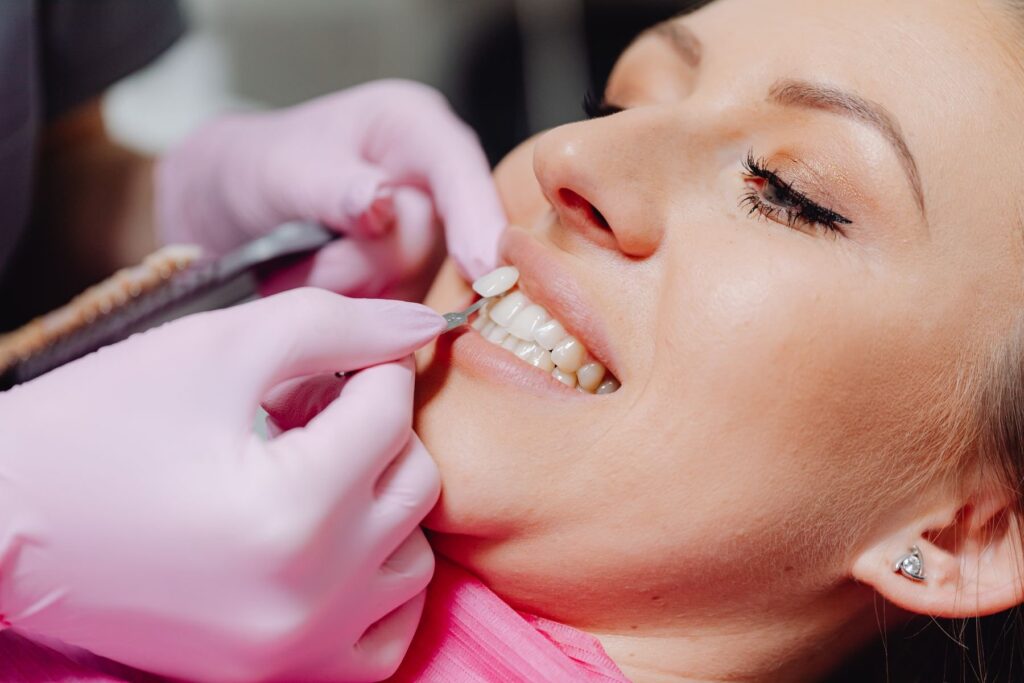
For porcelain veneers, the ADA outlines these steps: your dentist removes a thin layer of enamel, takes impressions or a 3D scan, a lab fabricates the veneers, and the dentist then bonds them to your teeth. Composite veneers are bonded and shaped directly in the mouth, often in a single visit. Our veneers and smile makeover services begin with a consultation to talk through your goals and options.
How long do veneers last?
Cleveland Clinic gives a lifespan of roughly 10 to 15 years. The ADA cautions that a veneer may chip, crack, wear down, or loosen over time and need to be re-bonded, repaired, or replaced. Research supports strong long-term results with porcelain: a systematic review in the Journal of Clinical Medicine estimated a 95.5 percent cumulative survival rate at 10 years, with fracture being the most common complication, followed by debonding. The review also found that veneers with incisal coverage and non-feldspathic ceramics performed better.
What are the risks and drawbacks?
- Not reversible. The ADA states that treatment is not reversible because tooth enamel is removed. Cleveland Clinic adds that removing enamel can weaken tooth structure.
- They can chip or loosen, especially with habits like biting nails or hard objects.
- Underlying problems must be addressed first. Veneers do not treat decay or gum disease.
The ADA also emphasizes getting veneers only from a licensed dentist, and warns against unlicensed “veneer technicians.”
How do you care for veneers?
The ADA recommends avoiding nail-biting and hard foods, wearing a mouth guard during sports, limiting foods and drinks that stain, brushing twice a day with fluoride toothpaste, and flossing regularly. Keep regular cleanings and exams so your dentist can check the veneers and the health of your gums.
Are there alternatives to veneers?
Depending on your goals, you may not need veneers. Teeth whitening can address surface stains, dental bonding can repair small chips or gaps with less enamel removal, and Invisalign can straighten crooked teeth. If a tooth is heavily damaged, a crown may be the better choice. If you see white spots that bother you, read our guide to white spots on teeth. We will walk through each option with you.
Frequently asked questions about veneers
What are dental veneers?
Veneers are custom-made, natural-looking coverings that bond to the front surface of your teeth to improve their color, shape, or alignment. They can be made of porcelain or composite resin.
How long do veneers last?
Cleveland Clinic gives a typical lifespan of about 10 to 15 years, though results vary. A systematic review of clinical studies estimated that about 95 percent of porcelain veneers survived 10 years. Veneers can chip, crack, wear down, or loosen over time and may need to be repaired or replaced.
Are veneers reversible?
No. For porcelain veneers a thin layer of enamel is removed, and because enamel does not grow back, the treatment is not reversible, according to the American Dental Association.
Who is not a good candidate for veneers?
People with untreated decay or gum disease need those problems treated first. The American Dental Association also notes veneers may not suit people who clench or grind their teeth or who have deep overbites.
How do I care for veneers?
Brush twice a day with fluoride toothpaste, floss daily, avoid biting nails or hard objects, limit staining foods and drinks, and wear a mouth guard for sports or if you grind your teeth.
Curious whether veneers are right for you?
Book a cosmetic consultation and we will review your smile, your goals, and the gentlest options to get you there.
- Parham Road: 2314 E Parham Rd, Henrico, VA 23228, (804) 261-1970
- Brook Road: 9007 Brook Rd, Glen Allen, VA 23060, (804) 372-4420
First time with us? Visit our new patient page or contact us to get started.
Quick takeaways
- Veneers are thin shells bonded to the front of teeth to change color, shape, or spacing.
- Porcelain is durable and stain-resistant. Composite is easier to repair but wears faster.
- Porcelain veneers usually require removing some enamel, so the treatment is not reversible.
- Expect roughly 10 to 15 years of service, with research showing high 10-year survival for porcelain.
- Treat decay and gum disease first, and avoid grinding or biting hard objects.
- Ask about alternatives like whitening, bonding, or aligners before deciding.
Sources
- American Dental Association. Veneers. MouthHealthy.org.
- Cleveland Clinic. Veneers: What Are Dental Veneers? Cost, Procedure & Advantages.
- Alenezi A, Alsweed M, Alsidrani S, Chrcanovic BR. Long-Term Survival and Complication Rates of Porcelain Laminate Veneers in Clinical Studies: A Systematic Review. Journal of Clinical Medicine. 2021;10(5):1074.